
Beyond Compliance: Himed’s Role in Cleaning Validation and Quality Excellence for Implant Manufacturing
By: Alexandra Rodriguez, Quality Assurance Manager
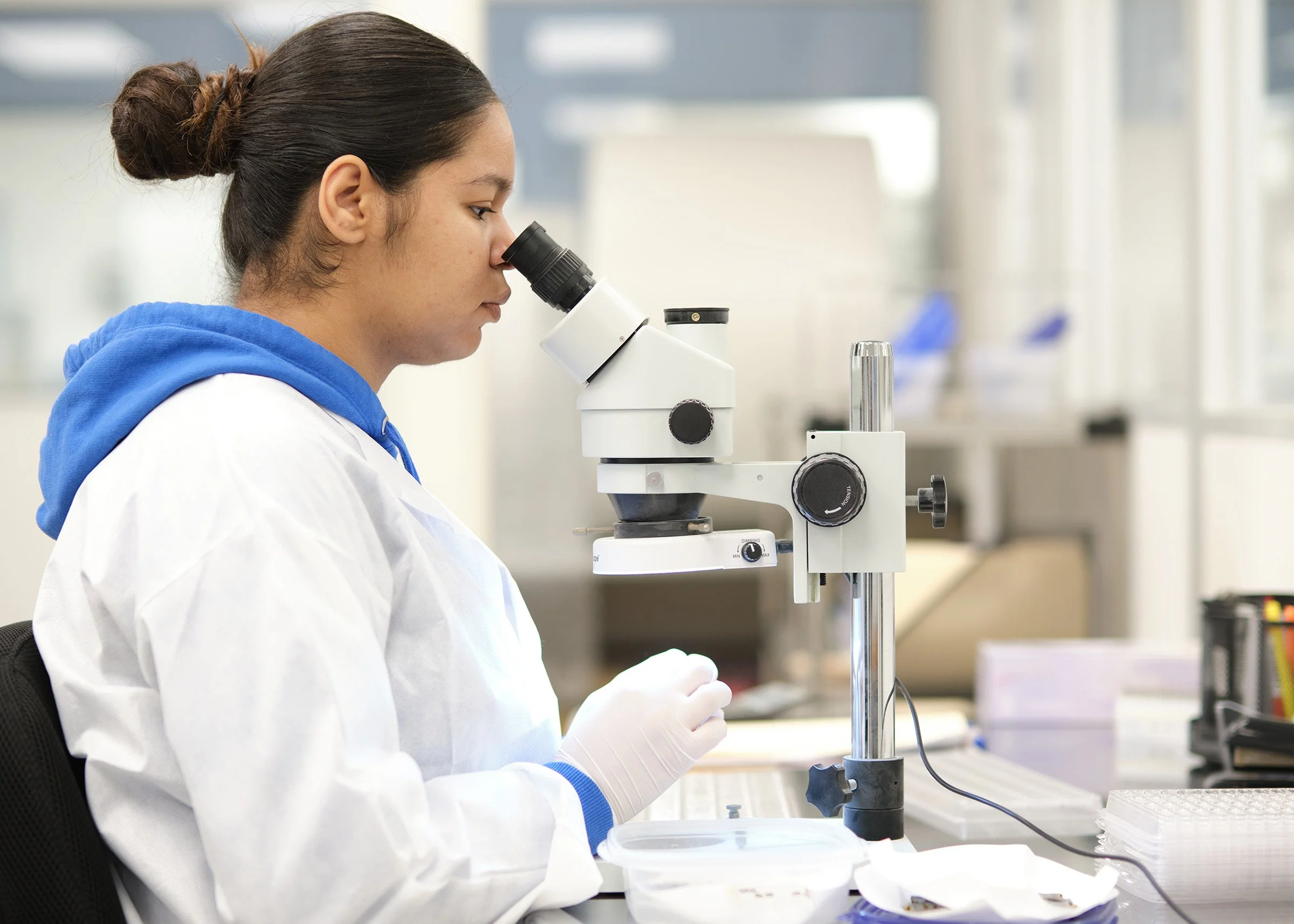
A quality inspector conducts visual inspections of dental implants that have received post-processing and passivation at Himed’s facility in New York.
From dental to orthopedic applications, implant reliability begins long before a device reaches the clinic. Behind each successful product is a network of specialized suppliers ensuring the materials, coatings, and surfaces meet the highest possible standards. Himed is one such supplier. As a biomaterials manufacturer with more than three decades of experience in advanced implant surface treatments, we support the medical device industry by combining material science expertise with a disciplined approach to process validation and quality assurance.
Although Himed is not a finished device manufacturer and therefore does not perform sterilization, our company operates under Good Manufacturing Practices (GMP) and a certified ISO 13485:2016 Quality Management System (QMS). These systems ensure that every material and process output achieves consistent cleanliness, repeatability, and regulatory integrity.
Integrating GMP and ISO 13485 for Process Control
Within the framework of ISO 13485, Himed manufactures biomaterials and provides surface treatment services that support the design, development, and production of Class I, II, and III medical devices manufactured by our customers. Himed’s processes are always an important component of the product journey, but do not result in finished medical devices as they must still undergo final sterilization and packaging elsewhere. Nevertheless, Himed’s QMS is structured to meet all relevant clauses of ISO 13485 related to process validation for critical cleaning operations, contamination control, environmental monitoring, material traceability, and supplier management.
These controls align with both FDA Quality System Regulation (21 CFR 820) and ISO 13485:2016 expectations for medical device suppliers. Himed’s surface treatment cleaning validation and surface treatment processes are designed to control contamination at the elemental level and ensure that every implant surface retains its integrity throughout downstream processing.
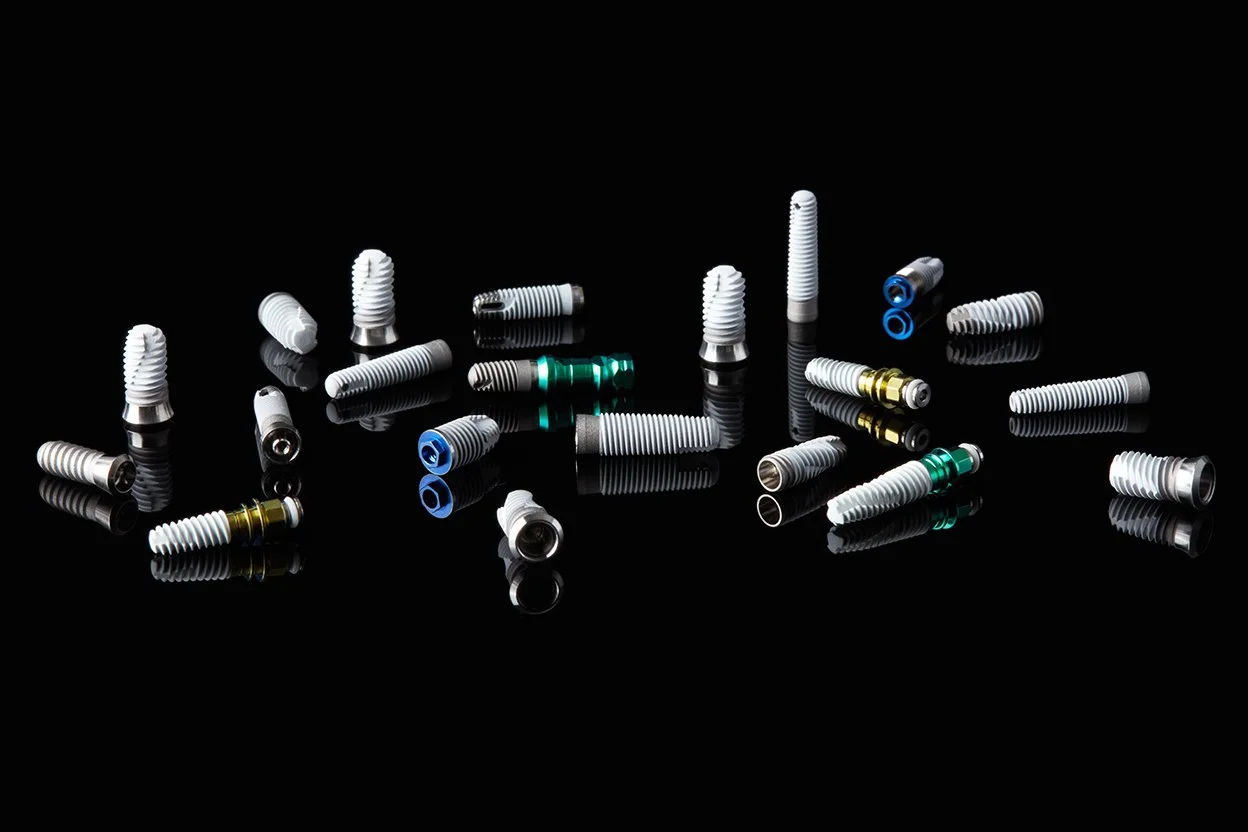
A selection of dental implants that have been post-processed with Himed’s MATRIX HA® process. The white coating represents plasma-sprayed hydroxyapatite over a titanium surface that was pre-treated with Himed’s MCD Apatitic Abrasive, while the colored sections are the result of type III color anodizing using MATRIX Color®. Himed provides surfacing solutions under the framework provided by ISO 13485 and has been independently certified compliant to those standards consistently for over sixteen years.
All our cleaning validations are periodically revalidated under worst-case conditions, such as using end-of-life chemicals near the end of their defined lifecycle. This approach tests the robustness and repeatability of cleaning processes and confirms their reliability under real-world manufacturing scenarios. In-process monitoring between validation cycles provides further assurance of stability and control, minimizing variability and risk for our customers.
Rigorous Cleaning Validations for Implant Surfaces
Himed’s cleaning validation program is designed not simply to meet regulatory expectations, but to exceed them. For surface-treated implants, revalidations incorporate multiple layers of testing and inspection, including:
Cytotoxicity testing (per ISO 10993): Verifies biological safety.
Bioburden testing: Confirms microbial control prior to sterilization by the final device manufacturer.
Visual inspection: Evaluates overall cleanliness and surface consistency.
SEM/EDS analysis: Detects and characterizes potential residues at the elemental level.
By combining biological, microbial, and elemental assessments, Himed ensures that all treated implant surfaces meet strict cleanliness standards before they reach sterilization. These activities demonstrate a proactive commitment to validation, patient safety, and regulatory readiness, which are core principles of our operations.

Himed’s in-house analytical lab allows for detailed imaging such as this scanning electron microscope (SEM) detail of a threaded dental implant surface that has been textured using Himed’s MCD Apatitic Abrasive prior to receiving a coating of hydroxyapatite. The extreme magnification provided by the SEM offers further validation that the titanium implant surface is uniform in texture and free of contaminants.
Comprehensive documentation supports each of these processes. Controlled acceptance, handling, and storage of raw materials prevent cross-contamination, and full traceability is maintained from incoming inspection through final product release. This level of process discipline not only satisfies GMP requirements but also strengthens our customers’ own validation and biocompatibility submissions.
Streamlining Regulatory Submissions and Supporting Quality Teams
Himed’s cleaning validation data and process documentation help device manufacturers streamline their regulatory submissions, particularly for biocompatibility and cleaning verification. By maintaining detailed records of process parameters, validation protocols, and performance data, Himed provides manufacturers with a dependable foundation for FDA and ISO documentation packages.
Himed’s goal is to serve as a true partner in manufacturing and compliance by supporting customers with the technical rigor and data integrity required to bring safe, effective implants to market.
A Culture of Continuous Compliance and Improvement
At Himed, compliance is not viewed as a static achievement but as an evolving commitment to quality and precision. Our integrated GMP and ISO 13485 systems are built around repeatability, traceability, and risk control, with ongoing monitoring and revalidation ensuring sustained process performance.
Every validation, inspection, and analysis reflects a unified purpose: to offer reliability, facilitate downstream sterilization and biocompatibility testing, and ultimately support the safe integration of implants into clinical use.

About the Author
Alexandra Rodriguez brings seven years of experience and a strong background in quality engineering to her role as Quality Assurance Manager at Himed. She oversees the company’s Quality Management System (QMS) and serves as the subject matter expert for all quality-related functions. Alexandra leads Himed through ISO 13485 and FDA audits, ensuring compliance, process integrity, and continuous improvement across the organization. Her commitment to quality and operational excellence has made her a key contributor to Himed’s regulatory success.